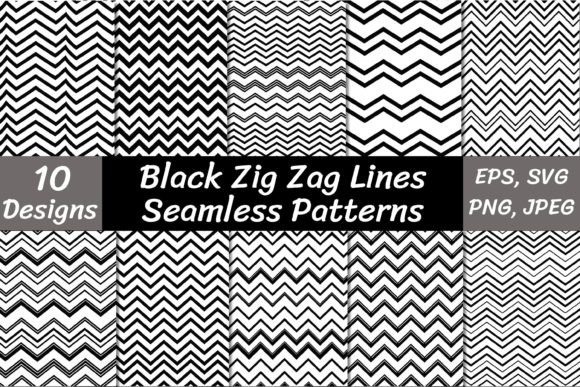
Black Zigzag Line Patterns: A Comprehensive Guide to Design Versatility and Application
In the realm of graphic design and digital art, few motifs possess the same immediate visual impact as the black zigzag line pattern. This geometric staple serves as a bridge between minimalist aesthetics and bold, dynamic energy. Whether used as a background texture, a border element, or a primary design feature, the black flat zigzag line pattern offers a unique blend of structure and movement. For professionals and hobbyists alike, understanding the nuances of these patterns is essential for creating designs that are both visually engaging and technically sound.
The distinctiveness of the black zigzag line pattern lies in its simplicity and adaptability. Unlike complex floral or organic textures that can dominate a composition, the zigzag provides a rhythmic foundation without overwhelming the viewer. Its sharp angles create a sense of forward momentum, making it an excellent choice for designs that need to convey action, modernity, or precision. When rendered in high contrast, such as pure black lines against a white or colored field, the pattern achieves a level of clarity that is difficult to replicate with softer shapes.
Evaluating Format Options: Vector vs. Raster Solutions
When selecting resources for your project, the file format you choose often dictates the flexibility and quality of the final output. The availability of Black Zigzag Line Patterns in multiple formats allows designers to select the tool best suited for their specific workflow. Understanding the tradeoffs between vector and raster files is a critical step in the decision-making process.
Vector formats, specifically EPS and SVG, represent the gold standard for scalability. These files utilize mathematical equations to define lines and shapes rather than a grid of pixels. Consequently, a black flat zigzag line pattern saved as an SVG or EPS can be scaled from a tiny icon on a mobile screen to a massive billboard without any loss of resolution or sharpness. This makes them indispensable for print media, logo design, and any application where the image size may change dynamically. If your project requires precise editing of individual lines or color adjustments later in the production process, vector files are the superior choice.
Conversely, raster formats like PNG and JPEG rely on pixel grids. While they are universally compatible and easy to use in web browsers and basic photo editors, they suffer from resolution limits. However, the specific product offering discussed here addresses this common limitation by providing 3600 x 3600 pixels for each digital paper. This high-resolution specification ensures that even when using raster files, the black zigzag line pattern remains crisp enough for large-format printing or detailed digital compositions. PNG files are particularly valuable for maintaining transparency, allowing the pattern to be layered over other elements seamlessly, while JPEGs offer smaller file sizes for faster web loading times.
The Advantage of Seamless Digital Papers
A key feature of modern digital paper collections is the seamless nature of the pattern. A seamless black zigzag line pattern means that the edges of the image align perfectly when tiled. This eliminates the need for manual stitching or awkward gaps that can ruin a background. By purchasing a set that includes 10 digital papers, users gain access to variations in line thickness, spacing, and orientation. This variety allows for nuanced design choices; for instance, a subtle, widely spaced zigzag might serve as a gentle background texture for text-heavy documents, whereas a dense, bold zigzag could act as a striking frame for a poster.
Comparing these digital papers to free online alternatives often reveals significant differences in quality and consistency. Free resources frequently lack true seamless tiling or come in low resolutions that appear pixelated when zoomed in. In contrast, a curated collection of black zigzag line seamless patterns ensures professional-grade results. The consistency across the ten included files allows designers to maintain a cohesive visual language throughout a multi-page project, such as a brochure or a website theme, without worrying about mismatched textures.
Practical Applications and Use Cases
The utility of the black flat zigzag line pattern extends far beyond simple decoration. Its geometric nature makes it highly effective in various industries and creative contexts. One of the most common applications is in fashion and textile design. The zigzag motif has historical roots in tribal and indigenous art, lending a timeless yet contemporary feel to fabric prints. Designers can easily apply these patterns to clothing, accessories, and home decor items like cushions or wallpaper.
In the digital space, these patterns are equally versatile. Web designers often use black zigzag line patterns as section dividers to break up long-form content without using solid blocks of color. The sharp angles guide the eye naturally down the page, improving readability. Furthermore, in branding and identity design, the zigzag can symbolize electricity, speed, or innovation, making it a strategic choice for tech startups or energy companies looking to project a dynamic image.
However, not every design scenario calls for this specific aesthetic. If a project requires a soft, romantic, or organic feel, the rigid geometry of a zigzag might clash with the intended mood. In such cases, designers might opt for fluid curves or organic brush strokes instead. Similarly, for projects requiring extremely fine detail where a single pixel error is unacceptable, relying solely on raster images (even at 3600 x 3600) might be risky if the final output size exceeds the native resolution. In those extreme scenarios, starting with the EPS or SVG versions is the only safe path.
Technical Considerations and File Management
Acquiring high-quality design assets involves more than just downloading a file; it requires proper management and technical preparation. The black zigzag patterns described here are delivered in a compressed archive. It is important to note that these files come zipped to reduce download time and protect the integrity of the data during transfer. To access the contents, users must ensure they have appropriate unzipping software installed on their computer or laptop, such as WinZip or WinRAR.
This step is often overlooked but is crucial for accessing the full suite of formats. Without the correct software, the files remain inaccessible, preventing the designer from utilizing the SVG, EPS, PNG, and JPEG options. Once extracted, the user will find a structured folder containing the ten distinct digital papers. Organizing these files immediately after extraction helps streamline the workflow, allowing for quick drag-and-drop functionality into design software like Adobe Illustrator, Photoshop, or Canva.
Another consideration is the color profile. Most high-resolution digital papers are designed in RGB for digital screens or CMYK for print. Before applying a black zigzag line pattern to a print job, it is wise to verify the color mode to ensure the black appears deep and rich rather than grayish or washed out. The versatility of the provided formats allows users to convert or adjust these settings within their preferred software, ensuring the final output meets industry standards.
Weighing the Decision: Why Choose This Resource?
When evaluating whether to invest in a dedicated set of black zigzag line seamless patterns, the primary factors are quality, variety, and efficiency. Compared to piecing together individual elements or searching for disparate sources, a bundled collection saves significant time. The inclusion of 10 digital papers provides a range of options that mimic the effect of buying multiple separate products, all at a fraction of the cost and effort.
The high resolution of 3600 x 3600 pixels per file is a standout feature for those who need to scale their work. Many budget-friendly options cap out at 1500 pixels, which is insufficient for professional printing. By choosing a resource that guarantees this level of detail, designers avoid the frustration of blurry outputs and potential client rejections. Additionally, the inclusion of vector files alongside raster ones future-proofs the purchase, ensuring the assets remain useful regardless of how technology or project requirements evolve.
Ultimately, the decision to use black zigzag line patterns depends on the specific goals of the project. If the goal is to add a touch of modern geometric flair, improve visual hierarchy, or create a textured background, these patterns are an ideal solution. They offer a balance of boldness and subtlety that few other shapes can match. For designers who value precision, versatility, and high-quality assets, downloading and integrating these patterns into their workflow is a practical and effective strategy.
In conclusion, the black flat zigzag line pattern is more than just a decorative element; it is a functional design tool. Whether utilized in a vector environment for infinite scalability or as a high-resolution raster texture for detailed compositions, these patterns deliver consistent, professional results. By understanding the strengths of the different file formats and the specific benefits of seamless digital papers, users can make informed decisions that enhance the quality and impact of their creative work.