Simple Patterns: A Practical Guide to Seamless Abstractions for Creative Projects
In the landscape of digital design assets, finding a resource that balances aesthetic simplicity with technical versatility is often a challenge. Simple Patterns represents a specific approach to graphic design that focuses on stylized, seamless abstractions. Unlike complex illustrations or photorealistic textures, these patterns rely on geometric clarity and abstract forms to create visual interest without overwhelming the viewer. For professionals in textiles, branding, and packaging, understanding the distinct value of this format is essential before committing to a purchase.
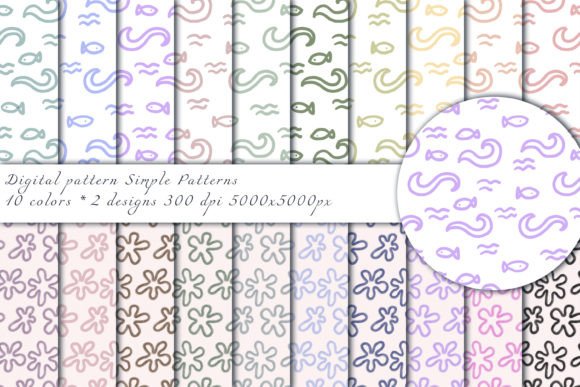
The core offering consists of 20 high-resolution JPG files and 2 PNG formats, all generated at a substantial 5000x5000 pixel resolution. This specific configuration addresses a common pain point in the industry: the need for scalable assets that maintain crisp edges when printed on large surfaces. Whether the goal is a full-scale wallpaper installation or a detailed fabric print, the 300 DPI specification ensures that the output remains sharp and professional. However, the decision to use Simple Patterns over other resources requires a clear understanding of where they fit within a broader workflow.
Distinguishing Features of the Collection
What sets this collection apart from generic pattern libraries is the deliberate focus on "stylized" abstraction. Many available options lean heavily toward either rigid grid structures or organic, hand-drawn watercolor styles. The Simple Patterns collection occupies a middle ground, utilizing clean lines and simplified shapes that feel modern yet timeless. This makes them particularly effective for projects requiring a sense of order and calm.
The inclusion of both JPG and PNG formats adds a layer of flexibility that is often overlooked. While the majority of the collection comes in JPG, which offers excellent compression for web use and standard printing, the two included PNG files provide transparency support. This distinction is critical for designers who need to layer patterns over existing backgrounds or integrate them into complex layouts where a solid color border would be disruptive. The ability to toggle between opaque and transparent layers allows for more creative freedom during the composition phase.
Furthermore, the dimensions of 5000x5000 pixels are not merely a marketing metric; they serve a functional purpose. In the context of home textile design, a designer might need to scale a motif up to cover an entire sofa cushion or a bedspread. A lower resolution asset would result in visible pixelation or blurring when stretched. By starting with a massive canvas, Simple Patterns ensures that the user can crop, scale, and manipulate the image without losing fidelity. This is a significant advantage over smaller, web-optimized assets that require extensive upscaling algorithms to reach print quality.
Evaluating Use Cases and Applications
The versatility of these patterns stems from their abstract nature. Because they do not depict specific objects or scenes, they are universally applicable across various industries. However, identifying the right application helps determine if this specific set aligns with your project goals.
- Fabric and Fashion: For clothing collections, the 300 DPI resolution is paramount. When printing on fabric, especially natural fibers like cotton or linen, ink absorption can sometimes soften fine details. The bold, simple geometry of these patterns holds up well against this potential loss of definition. They work particularly well for scarves, ties, and casual wear where a subtle background texture is desired rather than a dominant print.
- Packaging and Branding: In the realm of product packaging, space is often limited, and clutter is the enemy of brand recognition. Simple Patterns offer a way to add visual depth to boxes, bags, and labels without competing with typography or logos. The seamless nature of the design means that the pattern repeats perfectly, ensuring that no awkward breaks appear on the corners of a package.
- Home Textile and Interior Design: Wallpaper and upholstery are perhaps the most demanding applications. Here, the 5000px width allows for large-scale tiling without visible seams. A living room feature wall or a custom curtain set benefits from the continuity provided by these assets. The abstract style ensures that the pattern does not date quickly, maintaining relevance as interior trends shift.
- Scrapbooking and Paper Crafts: For hobbyists and small business owners creating wrapping paper or cardstock, the ease of use is a major factor. These files are ready to print immediately without needing complex editing software. The variety of styles allows users to mix and match different themes within a single project, such as combining a geometric pattern with a floral one for a layered effect.
Comparative Analysis: Format and Workflow Considerations
When evaluating Simple Patterns against other resources, it is important to consider the tradeoffs involved in file formats and resolution. Many free or low-cost pattern generators produce images optimized for screen viewing (72 DPI). While these are suitable for social media or website backgrounds, they are fundamentally unsuitable for physical production. Attempting to print a 72 DPI image at 300 DPI results in a blurry, pixelated mess. Simple Patterns bypasses this limitation entirely by providing high-fidelity source files from the outset.
However, there are scenarios where this specific collection might not be the optimal choice. If a project requires highly specific, illustrative motifs—such as a botanical garden theme or a retro 80s aesthetic—the abstract nature of Simple Patterns may feel too generic. In those cases, a specialized vector illustration pack or a curated photography library might offer better alignment with the creative vision.
Another consideration is the balance between file size and usability. High-resolution 5000x5000 images are large files. For a designer working on a laptop with limited storage or older hardware, managing twenty high-quality JPGs alongside two PNGs could impact performance. While this is a minor inconvenience compared to the benefit of print-ready quality, it is a factor for those with strict system requirements. Conversely, for professionals using high-end workstations, this is a non-issue and a welcome feature.
Decision Factors for Professionals
Selecting the right asset involves weighing several variables. First, consider the end medium. If the final output is strictly digital, such as a mobile app interface or a blog header, the 5000px resolution is overkill, and a lighter version might suffice. However, if the intention includes any form of physical production—be it a printed brochure, a fabric swatch, or a vinyl decal—the investment in high-resolution assets is necessary.
Second, evaluate the desired aesthetic tone. Simple Patterns excel in creating a sense of structure and modernity. They are ideal for brands that want to communicate efficiency, cleanliness, and contemporary style. If the goal is to evoke emotion through chaotic energy or intricate storytelling, a more complex artistic style would be more appropriate. The "simple" in Simple Patterns refers to the reduction of elements, not the reduction of impact.
Finally, consider the scalability of the license and usage. The inclusion of 20 JPGs and 2 PNGs provides a robust starting point for multiple projects. A designer can use one pattern for a clothing line, another for packaging, and a third for scrapbooking materials without needing to search for new assets. This consolidation saves time and maintains a cohesive look across different touchpoints of a brand or personal portfolio.
Limitations and Alternatives
No single product is perfect for every situation. One limitation of relying solely on pre-made seamless patterns is the potential for lack of uniqueness. Since these assets are available to anyone who purchases them, there is a risk that similar designs could appear in unrelated projects. To mitigate this, designers often modify the patterns slightly—adjusting colors, rotating angles, or overlaying them with other textures—to create a unique variation.
For those seeking infinite customization, vector-based pattern tools or generative AI models might offer more control. These methods allow for real-time adjustments to scale, color, and density. However, they require a higher level of technical skill and time investment. Simple Patterns serves as a bridge between the rigidity of fixed images and the complexity of creation from scratch. It offers immediate results with a high degree of polish, making it an efficient choice for tight deadlines.
Additionally, while the collection includes PNGs, the majority being JPGs means that transparency is not inherent to the whole set. If a project relies heavily on masking and layering, the user must be prepared to convert the JPGs to PNGs manually or accept the limitations of solid borders. This is a standard constraint in many raster-based collections but is worth noting for workflows that prioritize non-destructive editing.
Final Thoughts on Integration
The value of Simple Patterns lies in its ability to streamline the creative process. By providing high-resolution, versatile, and aesthetically consistent assets, it removes the technical hurdles often associated with print preparation. For adults aged 20–50 who are navigating the intersection of digital creativity and physical production, these patterns offer a reliable foundation.
Whether you are launching a new clothing line, designing eco-friendly packaging, or simply looking to enhance your home decor with custom prints, the combination of 5000px resolution and 300 DPI quality ensures that your vision translates accurately to reality. While alternatives exist for more niche or illustrative needs, the broad applicability of these stylized abstractions makes them a strong contender for a wide range of projects. As you evaluate your options, consider how the balance of simplicity and quality aligns with your specific goals. In a market saturated with noise, the clarity offered by Simple Patterns can be a defining element of your success.