Lilac Digital Paper Patterns: A Comprehensive Evaluation
Digital paper patterns have become an essential asset for modern creators, offering a versatile alternative to physical materials. Among the various options available, Lilac Digital Paper Patterns has garnered attention for its specific aesthetic and technical specifications. This collection is designed to serve a wide array of creative projects, ranging from digital scrapbooking to commercial product design. Understanding the capabilities and limitations of this specific set is crucial for anyone looking to integrate it into their workflow.
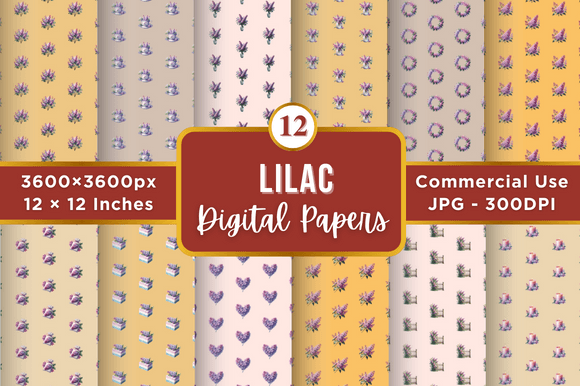
The core offering consists of 12 individual JPG files, each representing a unique pattern within the lilac color family. While the quantity might seem modest compared to massive bundles found in some marketplaces, the focus here is on quality and utility rather than volume. The primary value proposition lies in the high-resolution nature of the images and the inclusion of commercial use rights, which significantly expands the potential applications for the user.
Technical Specifications and Quality Standards
When evaluating digital assets, resolution and file format are the first metrics that determine usability. Lilac Digital Paper Patterns provides images with dimensions of 3600 x 3600 pixels at a resolution of 300 DPI. This specification is significant for several reasons.
- Print Readiness: A 300 DPI resolution ensures that the patterns can be printed at a standard size without pixelation or blurriness. This makes the files suitable for professional-grade output, such as greeting cards, invitations, and wall art.
- Scalability: The square aspect ratio (3600x3600) allows for flexibility in layout design. Whether the user needs a background for a social media post or a large format print, the image maintains clarity.
- Seamless Design: The patterns are described as seamless, meaning they can be tiled continuously without visible breaks. This feature is critical for projects requiring large surface areas, such as wrapping paper or tumbler wraps, where a repeating texture must look uniform.
Additionally, the files are provided in JPG format without watermarks in the final download. This is a practical consideration for users who need immediate access to clean assets for editing software like Photoshop, Canva, or Cricut Design Space. The absence of watermarks eliminates the need for time-consuming post-processing to remove branding overlays.
Applications and Use Cases
The versatility of these digital papers suggests a broad range of potential applications. The lilac hue offers a soft, calming aesthetic that fits well with themes of spring, birthdays, and celebrations. Below are the primary scenarios where this collection proves most effective.
Crafting and Scrapbooking
For hobbyists engaged in physical crafting, these patterns serve as excellent digital backdrops. Users can print the files on cardstock to create layered elements for scrapbooks. The high resolution ensures that intricate details remain sharp when cut out using die-cutting machines.
Greeting Cards and Invitations
The 3600-pixel width is ideal for creating custom stationery. Designers can overlay text and graphics onto the lilac patterns to produce personalized birthday cards, baby shower invitations, or thank-you notes. The seamless nature of the background allows for full-page designs that look cohesive and professional.
Commercial Product Creation
One of the most compelling features of Lilac Digital Paper Patterns is the inclusion of commercial use rights. This permission allows sellers to incorporate the patterns into products they intend to sell. Common examples include:
- Tumbler Wrapping: Creating custom vinyl designs for tumblers sold on platforms like Etsy.
- Sticker Sheets: Generating printable sticker packs for planners and journals.
- Wall Art: Selling framed prints featuring the patterns as minimalist decor.
This commercial license removes the legal barrier often associated with free or restricted-use digital downloads, making the purchase a viable investment for small business owners.
Evaluating Value and Tradeoffs
While the technical specifications are robust, potential buyers should consider the tradeoffs inherent in any digital product. The collection includes only 12 distinct patterns. For a user seeking a vast library with hundreds of variations, this set may feel limited. However, for someone needing a cohesive, high-quality palette for a specific project, the focused selection can be advantageous.
The price point is often a deciding factor in these evaluations. If the cost per pattern is competitive compared to similar high-resolution sets, the value increases significantly due to the commercial license. Conversely, if the cost is high relative to the number of files, the buyer must weigh whether the specific lilac shade and resolution justify the expense over generic alternatives.
Another consideration is the file format. While JPGs are universally compatible, they do not support transparency. Users requiring transparent backgrounds for layering complex designs will need to perform additional work to isolate the pattern or seek PNG versions. Furthermore, the lack of editable vector formats means the patterns cannot be scaled infinitely without loss of quality, though the 300 DPI resolution mitigates this for standard print sizes.
Situational Fit: When to Choose This Collection
Lilac Digital Paper Patterns is a strong fit for the following profiles:
- The Commercial Seller: Individuals looking to launch a line of printed goods or digital products who need legally clear, high-resolution textures quickly.
- The Event Planner: Professionals designing cohesive stationery suites for weddings or parties who require a specific color theme without the hassle of scanning physical paper.
- The DIY Enthusiast: Hobbyists who want to create gifts, such as wrapped presents or decorated planners, without purchasing expensive physical craft supplies.
In these situations, the combination of high resolution, seamless tiling, and commercial rights offers a streamlined solution that saves time and reduces material costs.
When Alternatives May Be Preferred
There are scenarios where this specific collection might not be the optimal choice. Users who require a diverse color palette spanning multiple seasons or moods may find the single-color focus limiting. In such cases, a larger bundle containing mixed hues would provide better variety.
Additionally, if a project requires extreme scalability beyond 3600 pixels, such as billboard-sized prints, a vector-based pattern (SVG or EPS) would be necessary. Similarly, if the user's workflow relies heavily on non-destructive editing layers, a PSD file with separated layers would offer more flexibility than a flat JPG.
Final Considerations for Decision Making
Selecting the right digital paper involves balancing aesthetic preference with technical requirements and budget. Before purchasing Lilac Digital Paper Patterns, it is advisable to review sample previews to ensure the specific shade of lilac aligns with your vision. Checking the licensing terms one last time is also recommended to confirm that your intended use case is covered under the commercial agreement.
Ultimately, the decision rests on the specific needs of the project. If the goal is to produce high-quality, professionally printed items with a cohesive lilac theme, and commercial usage is required, this collection represents a practical and efficient resource. By understanding the strengths of the 300 DPI resolution and the utility of the commercial license, creators can make an informed choice that enhances their workflow and supports their creative goals.