Exploring the Practical Value of Pansy Petunia Flowers Patterns
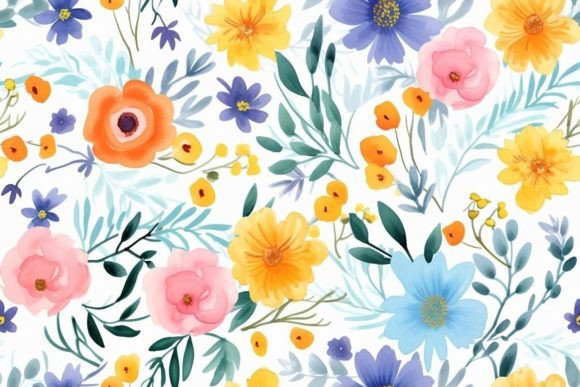
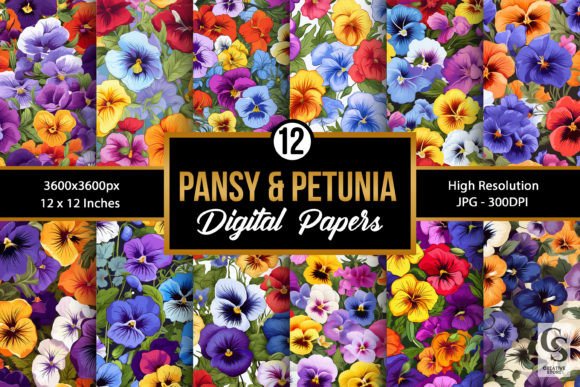
In the current landscape of digital design and creative production, the distinction between a generic asset and a high-quality resource often comes down to technical specifications and versatility. The Pansy Petunia Flowers Patterns collection addresses a specific niche within floral digital assets, offering a curated set of twelve seamless designs intended for professional and semi-professional applications. For creators ranging from small business owners to freelance graphic designers, the utility of such a pack is not merely aesthetic; it lies in its resolution, file structure, and adaptability across various mediums.
This analysis evaluates the collection based on its technical delivery, practical application in commercial workflows, and the overall value proposition for users seeking reliable floral backgrounds. The focus remains on how these assets function within real-world scenarios rather than abstract artistic merit.
Technical Specifications and File Integrity
The foundation of any useful digital paper set is its technical consistency. The Pansy Petunia Flowers Patterns bundle delivers twelve distinct digital papers contained within a single compressed archive. While convenience is a factor, the true strength here is the adherence to industry-standard resolution requirements.
All files are provided at 300 DPI, a critical metric for print-on-demand services, physical product manufacturing, and high-fidelity web graphics. In an era where many free resources offer low-resolution images that appear pixelated when scaled, this specification ensures that the output remains crisp whether printed on standard letterhead or large-format wall art. The dimensions are standardized at 3600 x 3600 pixels, which translates to 12″ x 12″ at the specified resolution. This square format is particularly advantageous for:
- Social Media Content: Perfectly aligned with Instagram squares and Pinterest pins without requiring cropping or distortion.
- Print Layouts: Ideal for scrapbook pages, planner inserts, and card stock projects where a 12-inch base is the norm.
- Digital Backgrounds: Sufficient resolution for desktop wallpapers and website hero sections that demand sharpness on Retina displays.
The inclusion of JPG files ensures broad compatibility. Unlike PSD or AI files that require specific software suites, JPGs can be opened immediately in virtually any image editor, word processor, or web builder. This reduces friction in the workflow, allowing professionals to integrate the patterns into their projects without unnecessary setup time.
Application in Commercial and Personal Projects
The versatility of the Pansy Petunia Flowers Patterns extends beyond simple decoration. The seamless nature of the tiles allows for tiling across infinite surfaces, making them highly effective for creating immersive backgrounds. For entrepreneurs and marketers, this capability opens several revenue-generating avenues.
Product Packaging and Branding
Small business owners often struggle to find unique, non-generic packaging materials. These patterns provide a ready-made solution for gift wrapping, product labels, and branded envelopes. The floral motif, while traditional, offers a timeless appeal that fits well with brands in the wellness, lifestyle, and artisanal sectors. By using high-resolution seamless patterns, businesses can create custom packaging that elevates the perceived value of their products without the cost of hiring a full-time illustrator.
Stationery and Educational Materials
Educators and content creators frequently need engaging visuals for worksheets, planners, and journals. The 12″ x 12″ dimension aligns perfectly with standard stationery sizes used in homeschooling curricula and corporate training manuals. Teachers can utilize these patterns to create visually appealing study guides, while freelancers can incorporate them into digital planners sold on marketplaces like Etsy or Gumroad.
Physical Product Customization
The specifications support a wide range of DIY and print-on-demand projects. Users can apply these patterns to:
- Tumbler Wraps: Creating custom sleeves for travel mugs and water bottles.
- Notebook Covers: Designing personalized covers for spiral notebooks and sketchbooks.
- Wall Art: Preparing files for canvas printing or framed posters.
- Greeting Cards: Producing bulk holiday or event cards with consistent branding.
Design Consistency and Aesthetic Utility
A common pitfall in multi-pattern bundles is inconsistency in style or color palette. When evaluating the Pansy Petunia Flowers Patterns, the primary concern is whether the twelve variations work cohesively. From a functional standpoint, a successful pattern set should offer enough variety to prevent monotony while maintaining a unified theme.
The collection appears designed to support mixed-media projects. Having twelve distinct options allows a creator to alternate backgrounds within a single document—such as a wedding invitation suite or a seasonal blog post—without clashing. This flexibility is crucial for maintaining visual interest in long-form content. Whether a user needs a subtle texture for text-heavy pages or a bold background for a promotional flyer, having a range of densities and color schemes within one package saves significant time compared to sourcing individual assets.
Furthermore, the "seamless" quality is paramount. If the edges do not align perfectly, the pattern cannot be tiled for large-scale applications like wallpapers or fabric prints. High-quality seamless patterns ensure that the transition between tiles is invisible, a feature that is often difficult to achieve manually but essential for professional results.
Workflow Integration and Efficiency
For professionals managing tight deadlines, efficiency is a currency. The Pansy Petunia Flowers Patterns bundle supports a streamlined workflow by eliminating the need to search multiple sources for matching floral textures. The fact that all twelve files are delivered in a single zip file simplifies organization. Instead of downloading and sorting through dozens of disparate links, a user can extract the entire library and have immediate access to the full range of options.
This consolidation is particularly beneficial for agencies and teams working on collaborative projects. A project manager can distribute the single zip file to team members, ensuring everyone is working from the same version of the assets. This reduces the risk of version control issues and ensures that the final output maintains the intended visual standards.
Limitations and Considerations
While the technical specifications are robust, users must consider the limitations inherent in raster-based image formats. JPG files are lossy, meaning they may not be suitable for every type of editing. For instance, if a designer requires transparency (alpha channels) or vector scalability, a JPG will not suffice. In such cases, the patterns would need to be converted or used as flat layers over other elements.
Additionally, the floral subject matter, while classic, may not align with modernist or industrial design aesthetics. Brands targeting a strictly minimalist or tech-focused audience might find the petunia motif too traditional. However, for those in the lifestyle, craft, and organic sectors, this limitation is likely negligible.
Conclusion: Strategic Value for Creators
The Pansy Petunia Flowers Patterns collection represents a solid investment of time and resources for anyone engaged in visual communication. Its strength lies not in novelty, but in reliability. The combination of high-resolution output, seamless tiling capabilities, and versatile file formats makes it a functional tool rather than just a decorative add-on.
For the freelancer, educator, or small business owner, the ability to quickly produce professional-grade materials is often the difference between a polished product and a subpar one. This bundle provides the necessary infrastructure to elevate those outputs. By integrating these patterns into their workflow, creators can focus more on strategy and content, leaving the heavy lifting of background design to a pre-validated, high-quality asset library.
Ultimately, the decision to use these patterns depends on the specific needs of the project. However, given the technical rigor and the breadth of application—from digital wallpapers to physical merchandise—it stands out as a resource that delivers genuine utility. It serves as a testament to the idea that good design tools are those that disappear into the background, allowing the core message of the project to shine through.